
In the face of escalating climate challenges, the construction sector is a significant contributor to global carbon emissions, accounting for 39% according to the 2022 Global Status Report for Buildings and Construction. In the fight against climate change, innovative and sustainable materials are essential.
Bamboo, a fast-growing woody grass, is emerging as a powerful nature-based solution (NBS) with immense potential to mitigate climate change. This article explores bamboo’s role as a carbon sink, its applications in carbon storage, and its contribution to carbon credits, drawing insights from recent scientific research.
Key Takeaways

Bamboo as a Carbon Sink
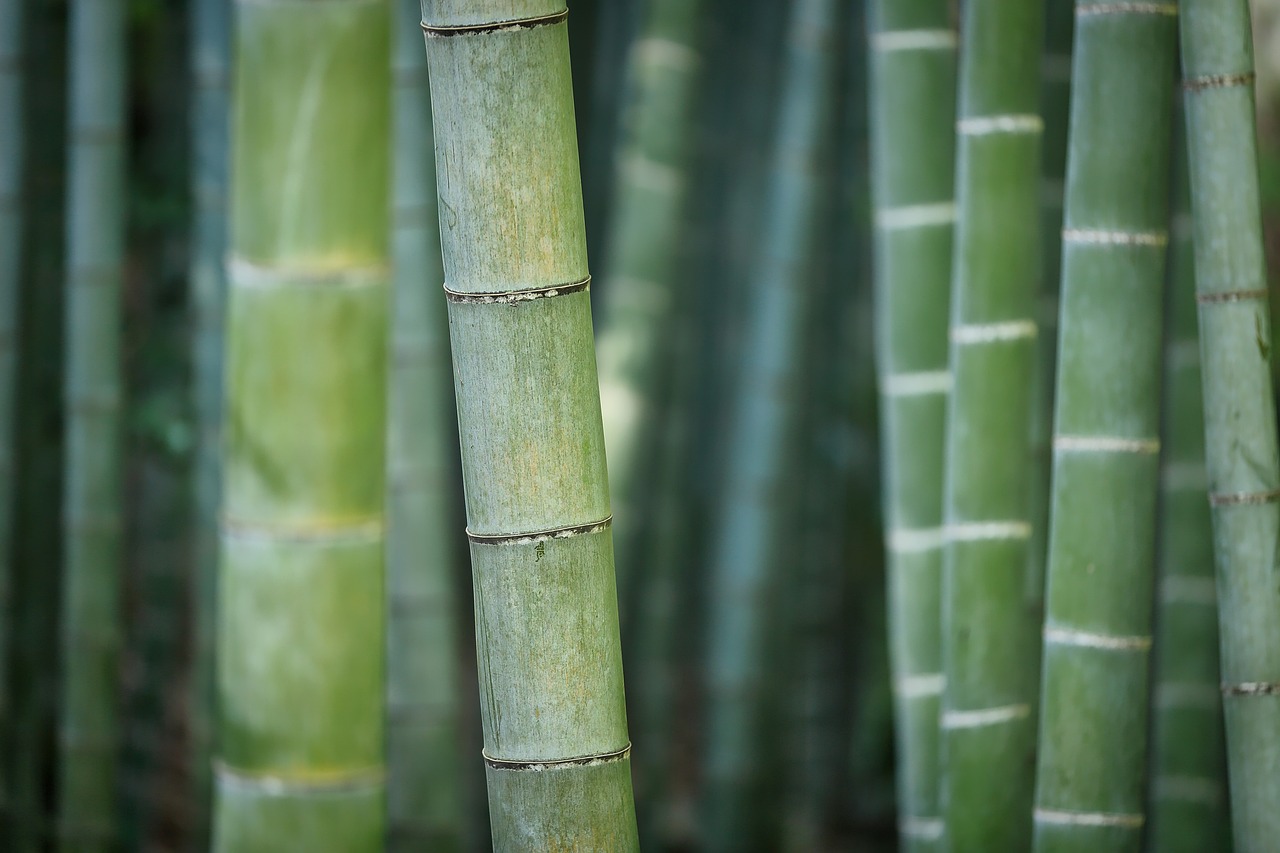
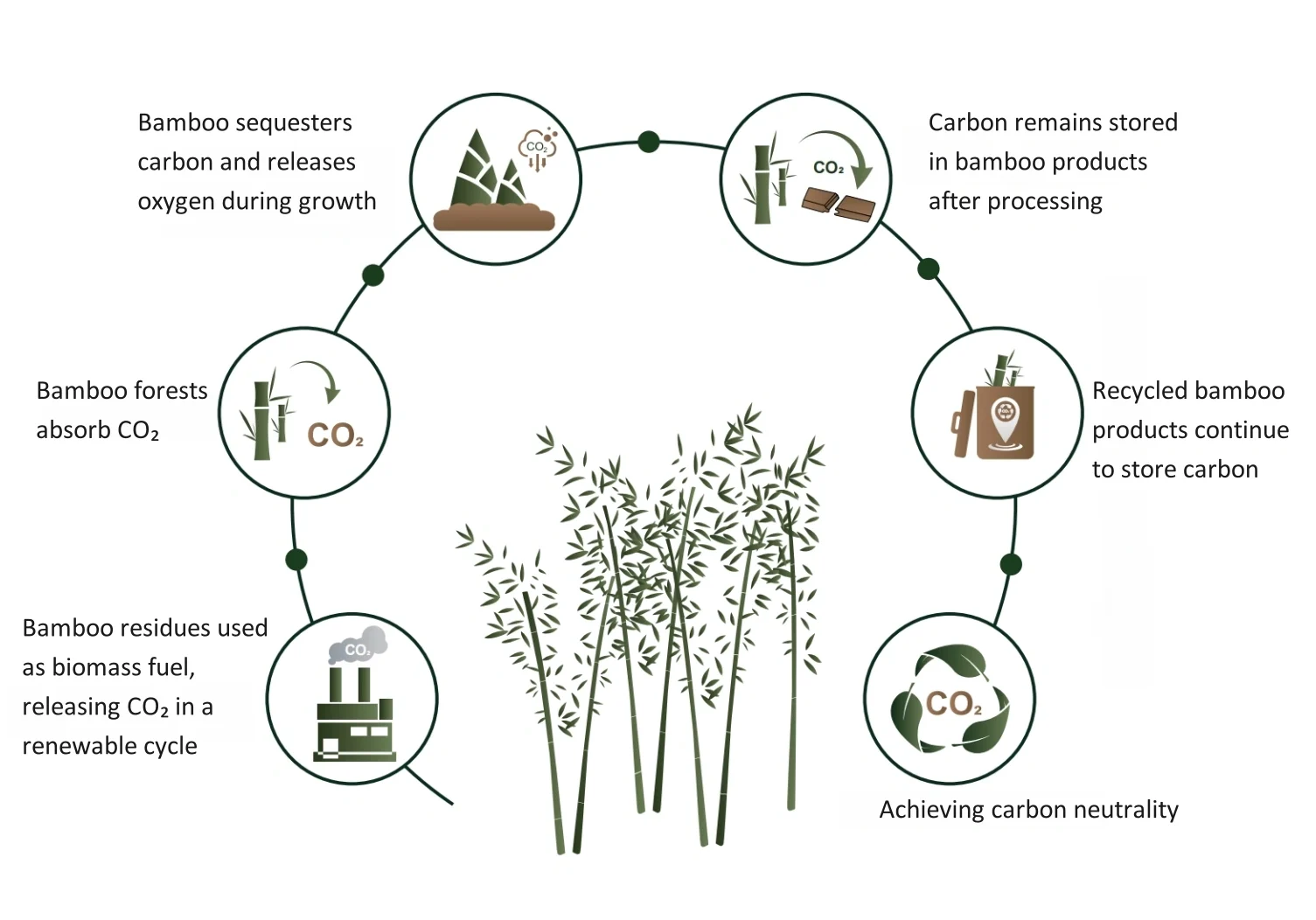
Bamboo’s rapid growth and high biomass accumulation make it a remarkable carbon sink. A review in Climate journal confirms that bamboo forests not only sequester carbon efficiently but can also outperform certain temperate and tropical tree species in annual carbon uptake (Pan et al., 2023).
The claim that bamboo forests sequester CO₂ at rates exceeding those of traditional forests is strongly supported by recent scientific research. A 2025 study published in Forest Ecosystems reveals that Moso bamboo forests exhibit an average annual Net Ecosystem Productivity (NEP)—a direct measure of carbon sequestration—of 7.31 ± 2.76 metric tons of carbon per hectare (Lv et al., 2025).
This sequestration rate significantly outpaces that of many well-studied forest ecosystems. The same study provides a direct comparative context, noting that the Moso bamboo forest’s NEP is approximately:
Bamboo’s unique harvesting cycle, typically 4–5 years for mature stands, ensures continuous carbon sequestration without depleting the ecosystem. Unlike timber species, which require decades to mature, bamboo can be sustainably harvested annually, making it a renewable and efficient carbon sink.
Carbon Storage in Bamboo Products
Harvested bamboo can be transformed into durable products such as flooring, panels, and furniture, effectively storing carbon for decades. Life cycle analysis (LCAs) demonstrate that bamboo-based materials often achieve net-negative carbon footprints due to the long-term carbon storage within the products themselves.
For instance, peer-reviewed research on bamboo scrimber flooring shows a carbon footprint of -600 kg CO₂-eq/m³, confirming that the carbon sequestered in the material exceeds emissions from harvesting, processing, and transportation (Gu et al., 2019). This negative footprint is attributed to bamboo’s rapid carbon sequestration during growth and the stability of carbon stored in high-density engineered bamboo products.
Beyond storing carbon, bamboo offers a critical secondary benefit: displacing high-emission materials. Using bamboo products as substitutes for concrete, steel, and plastics can generate substantial “avoided emissions,” amplifying its overall climate mitigation impact far beyond the biogenic carbon stored in the product itself (Pan et al., 2023).
Bamboo’s versatility also reduces pressure on traditional timber resources, contributing to forest conservation and biodiversity. As a rapidly renewable resource, bamboo provides a substantial annual yield of biomass that directly substitutes for timber in numerous applications, offering a proven and scalable alternative to deforestation.
Carbon Credits and Bamboo Projects
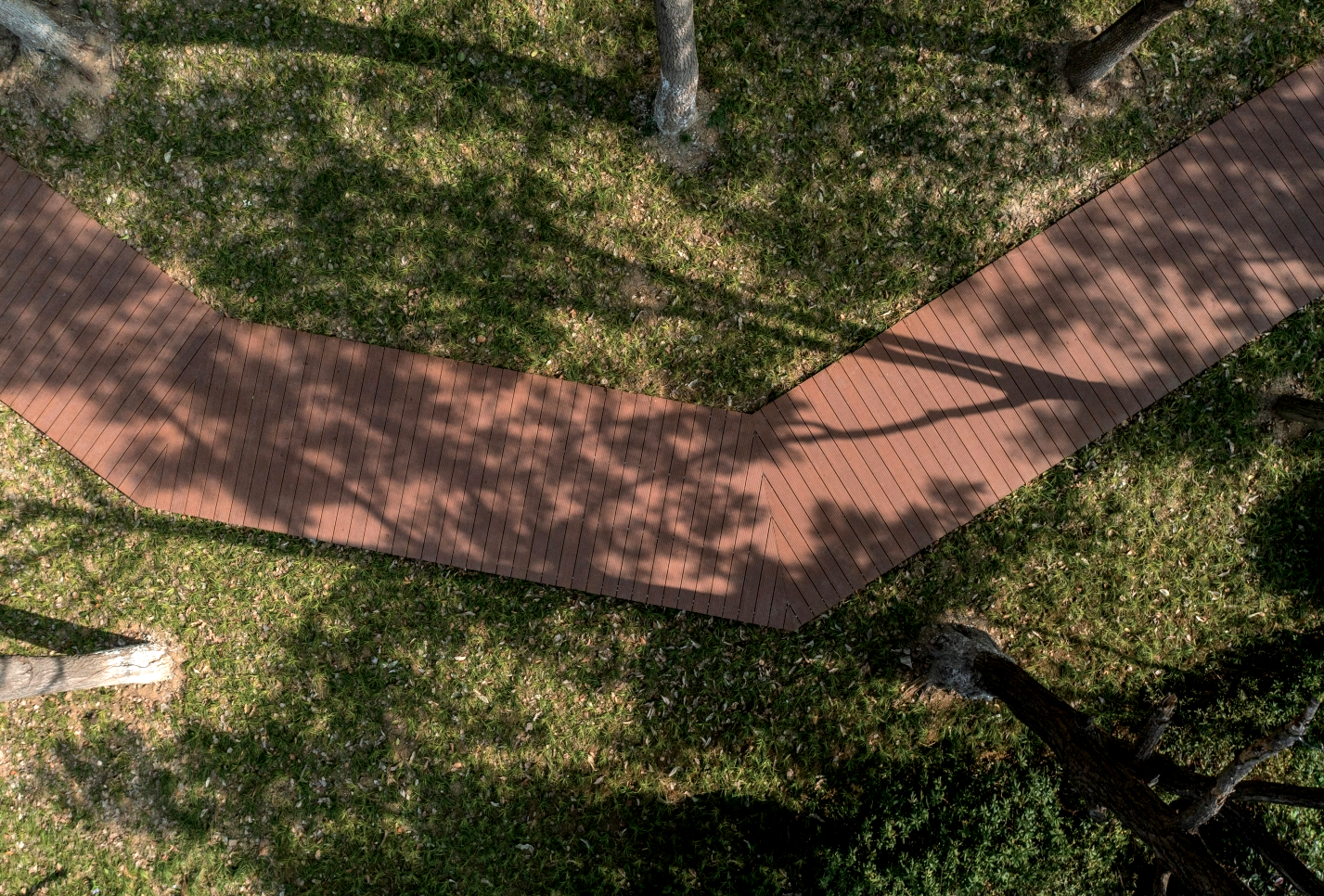
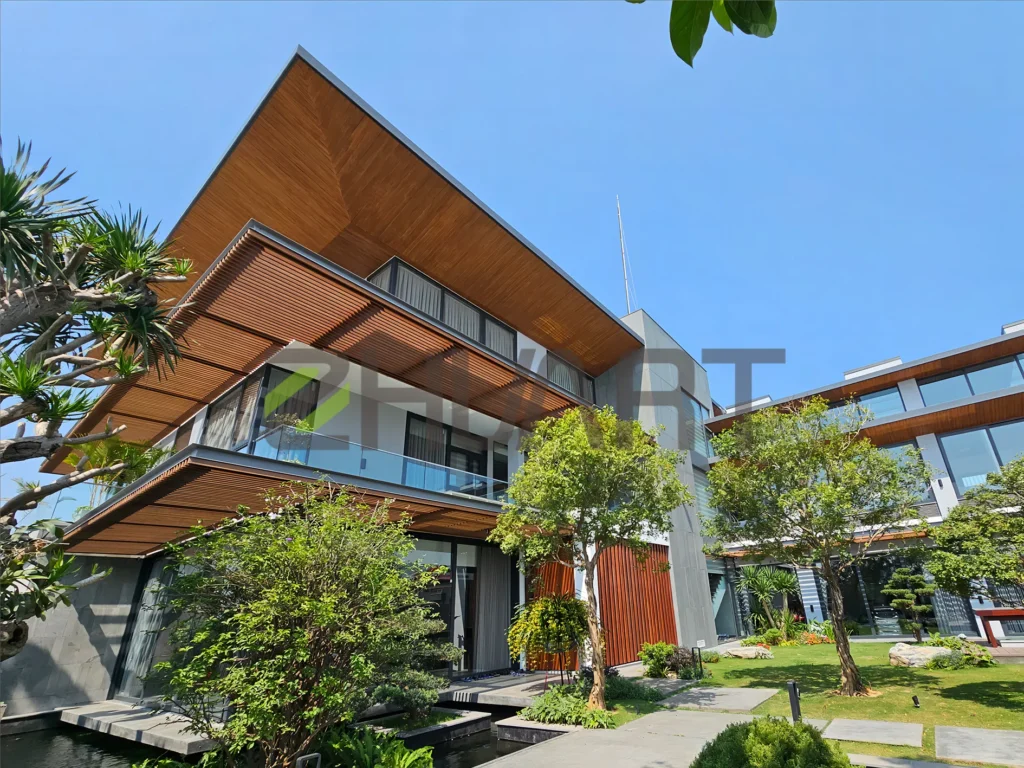
The exceptional carbon footprint of bamboo building materials creates a compelling value proposition for sustainable construction projects. By specifying high-density bamboo products for structural elements, cladding, or decking, a project effectively transforms the building into a long-term carbon reservoir.
While bamboo’s potential is clear, its integration into carbon markets faces specific challenges, primarily due to its botanical classification as a grass rather than a timber species. This has historically created ambiguity for its inclusion under mainstream forest-carbon methodologies like REDD+.
However, the situation is improving. Recognising this gap, carbon credit methodologies for bamboo afforestation and reforestation are now under active development and review under major standards, such as the Verified Carbon Standard (VCS). The biggest challenge now is not technical feasibility, but the widespread use of these new rules for bamboo. This is crucial for unlocking large-scale investment.
The Path Forward
Bamboo has transcended its role as a promising material to become a proven, scalable solution for carbon-smart construction. The path forward requires turning this potential into standardized practice, through continued research, the scaling of certified carbon projects, and the adoption of clear international standards. By integrating bamboo into mainstream building strategies, we can transform urban landscapes into active carbon sinks.
ZHUART: Building the Future with Advanced Bamboo
ZHUART is currently the largest manufacture of high-density thermo bamboo, a type of advanced engineered bamboo material. We are dedicated to transforming bamboo into innovative, eco-friendly building solutions that align with global sustainability goals.
ZHUART offers a range of high-performance bamboo products, including decking, cladding, panels, and custom solutions. Each product is engineered to deliver exceptional durability, timeless aesthetics, and a significantly reduced environmental footprint.
Join us in building a world where architecture actively regenerates the environment. Explore our technical portfolios and project solutions at zhuartbamboo.com.