
The Science Behind ZHUART® Thermo Bamboo
Revolutionizing bamboo into high-performance, durable materials
What is Thermo Bamboo?
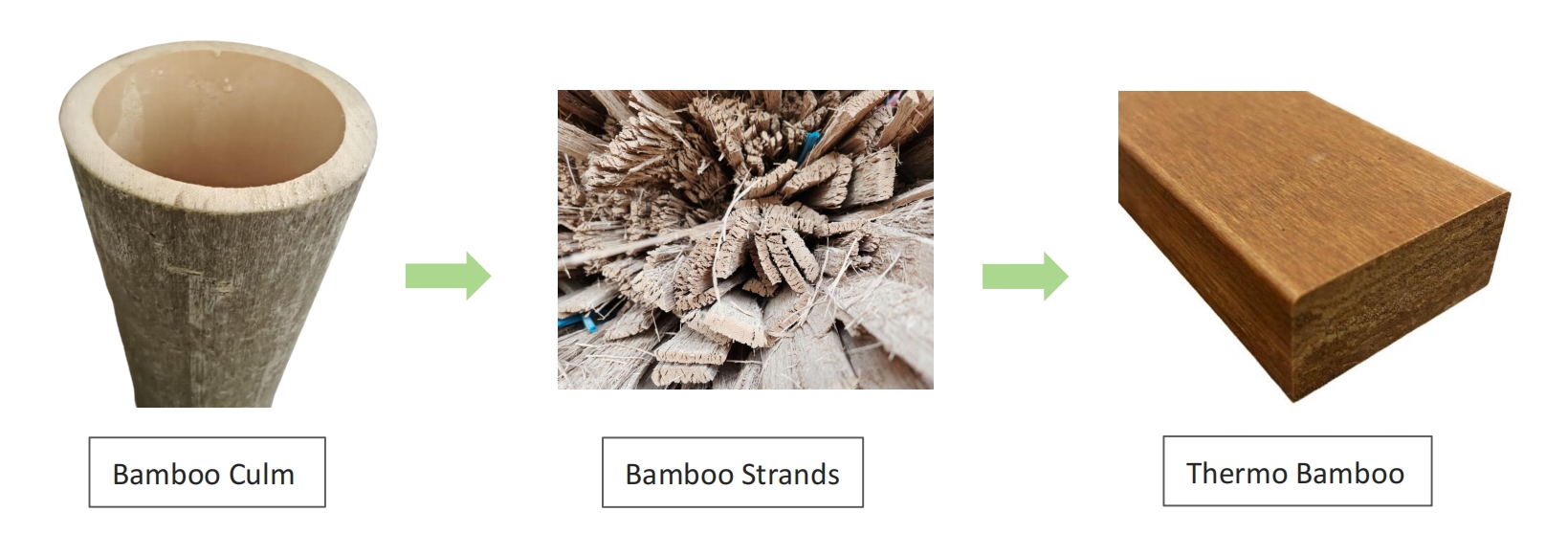
ZHUART® Thermo Bamboo is our proprietary high-performance bamboo material. Classified as bamboo scrimber, it is an engineered material made by recombining bamboo strands under high heat and pressure.
While bamboo is a fast-growing and renewable resource, its natural form is susceptible to decay, deformation, and pest damage.
Through a carefully controlled 20-step process, we turn raw bamboo into Thermo Bamboo. This process removes sugars, enhances durability, and restructures the bamboo at the molecular level, producing a material that offers:
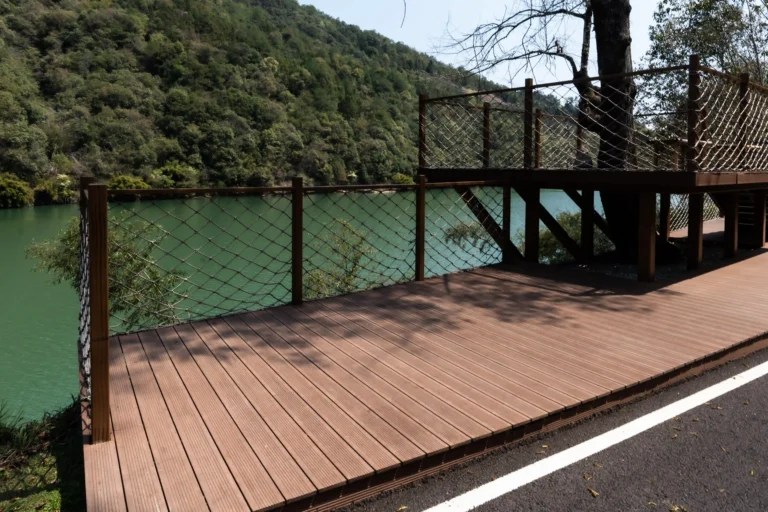
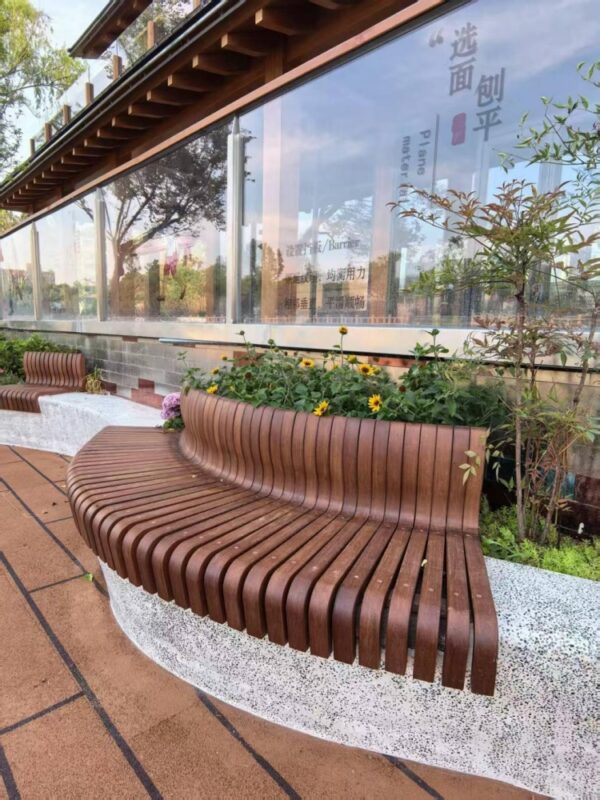
Today, ZHUART® Thermo Bamboo is widely used in architectural, landscape, and customized outdoor applications around the world.
Applications:
Production Process
1. Raw Material Selection
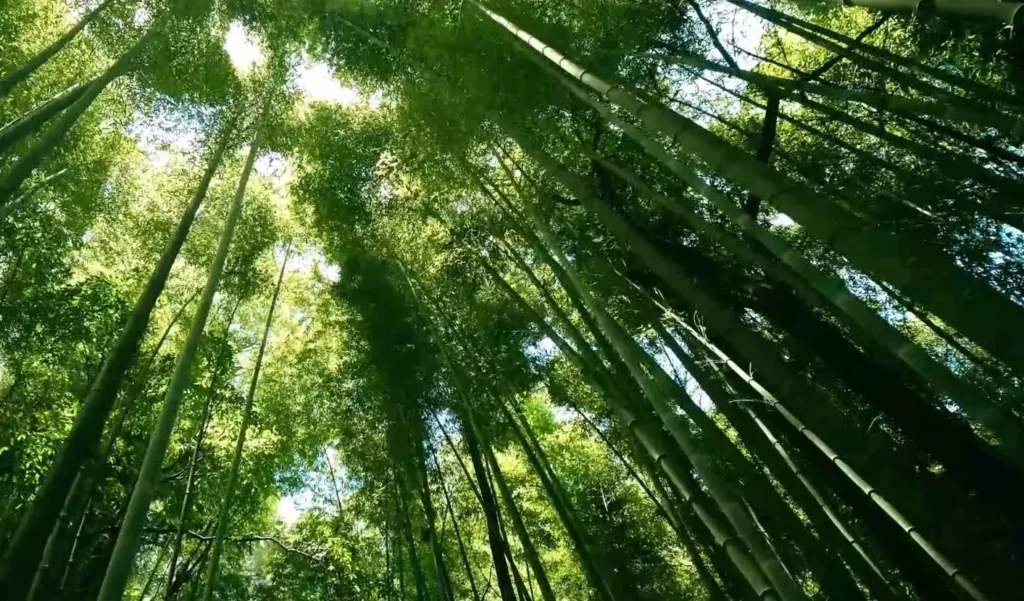
Our thermo bamboo products start with carefully selected Moso bamboo (Phyllostachys edulis), harvested at 4 to 6 years old. These culms are sourced from responsibly managed plantations in Fujian and Zhejiang provinces, regions known for their rich bamboo resources. At this stage of maturity, the bamboo reaches ideal fiber density and uniform structure, which are critical for the stability and performance of thermo-treated materials.
2. Strand Preparation
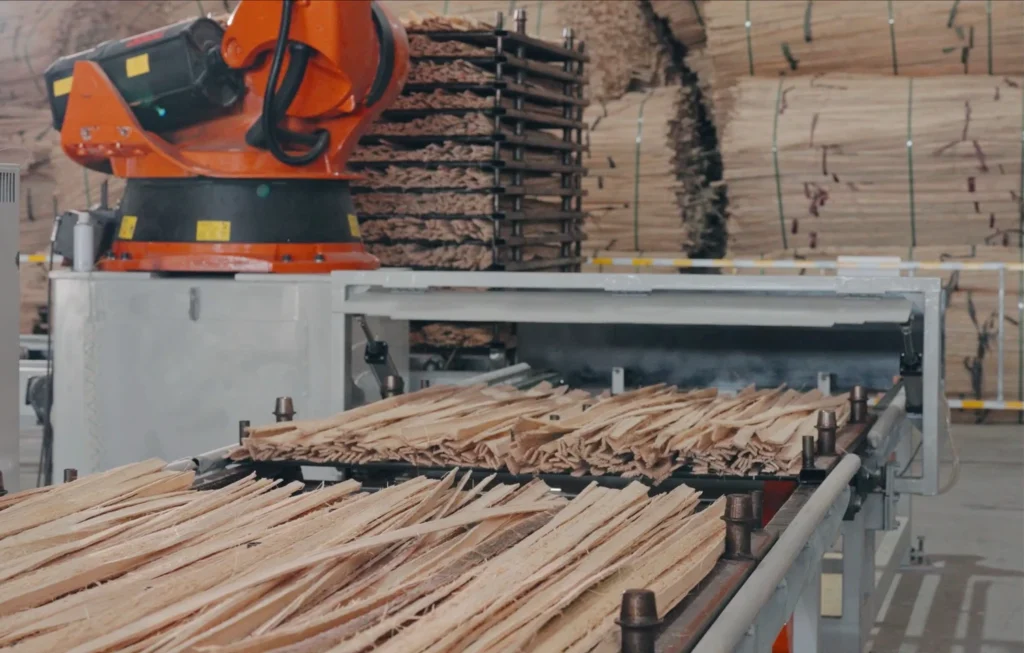
The harvested Moso bamboo culms are split into uniform strips, and then passed through a rolling machine that separates the bamboo fibers. This step, called defibering, helps loosen the compact structure and forms long, flexible bamboo strands.
During this process, we remove both the outer bamboo skin and the inner layer, and only keep the middle tissue — bamboo meat.
3. Carbonization
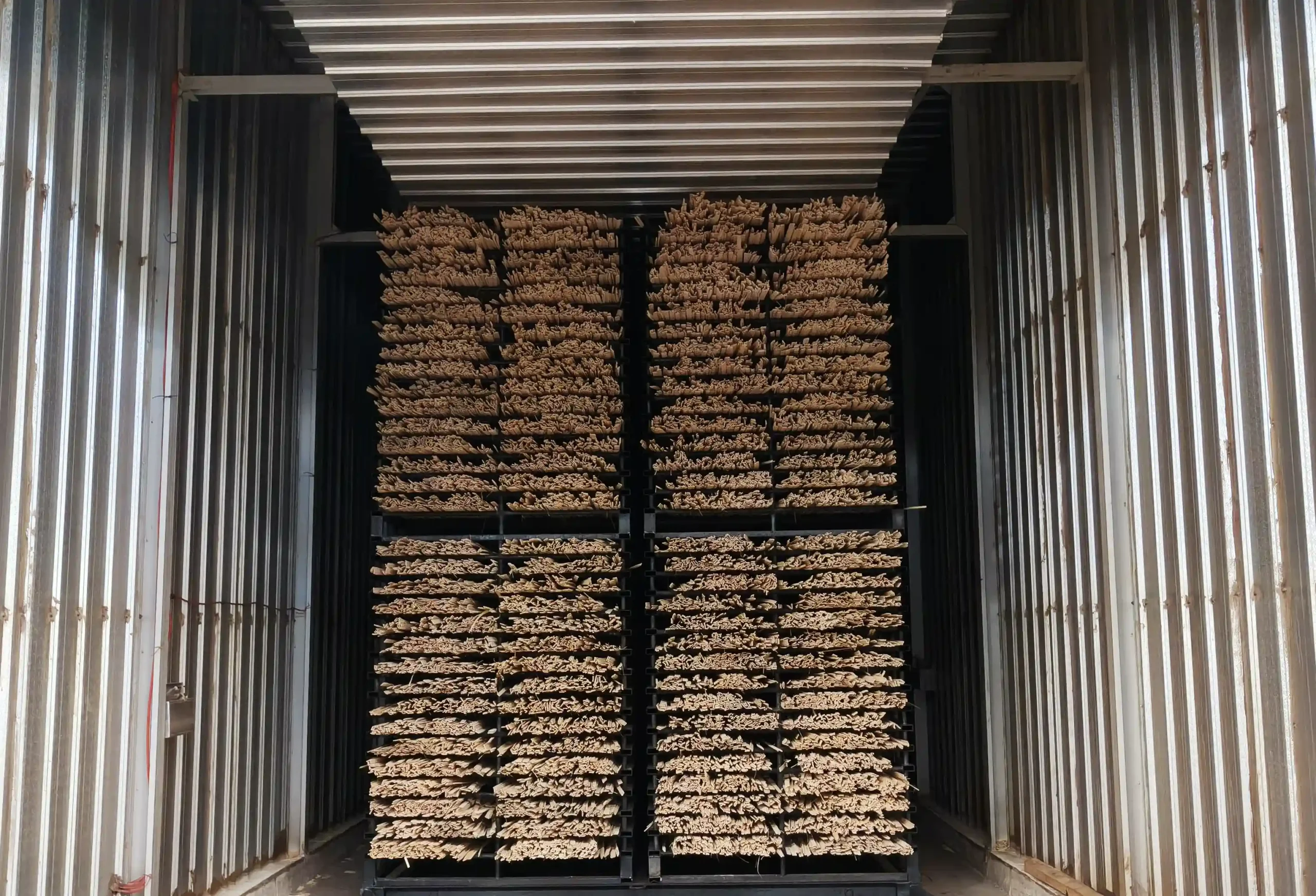
To enhance the durability and stability of bamboo fibers, ZHUART applies two heat treatment methods based on product type:
Both processes serve two functions:
4. Resin Impregnation
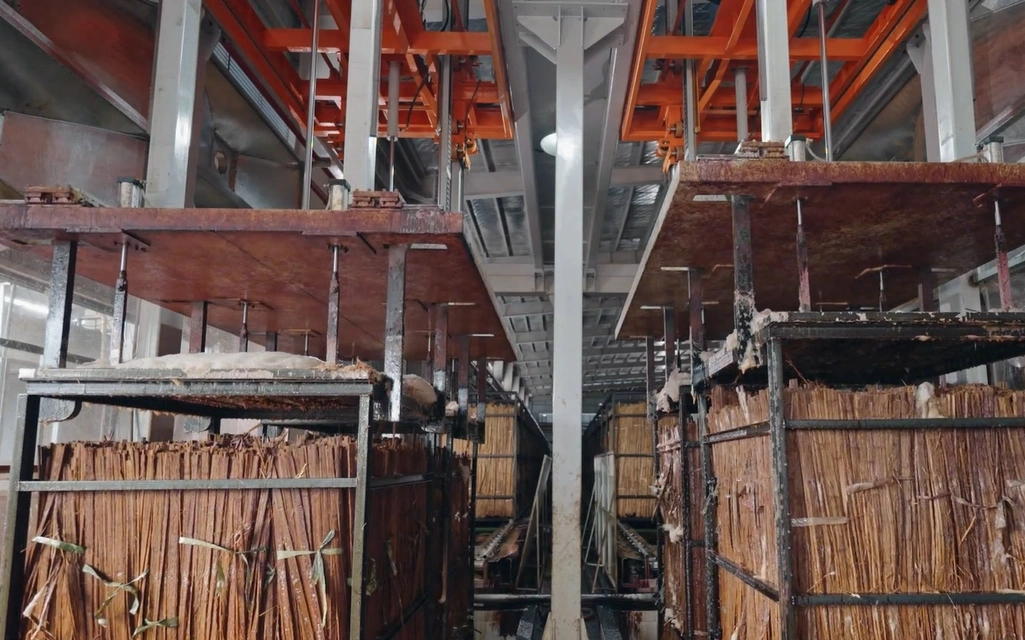
After heat treatment, bamboo strands are immersed in phenolic resin to bond the fiber bundles together. During this process, the resin penetrates deeply into the bamboo’s cell structure, filling internal voids and coating each fiber to form a strong and cohesive internal matrix. Excess resin is then drained, and the strands are carefully dried to reach the optimal moisture content before hot pressing.
Phenolic resin is commonly used in outdoor-grade engineered wood. It helps reduce surface cracking and significantly improves moisture resistance and dimensional stability.
5. Hot Pressing
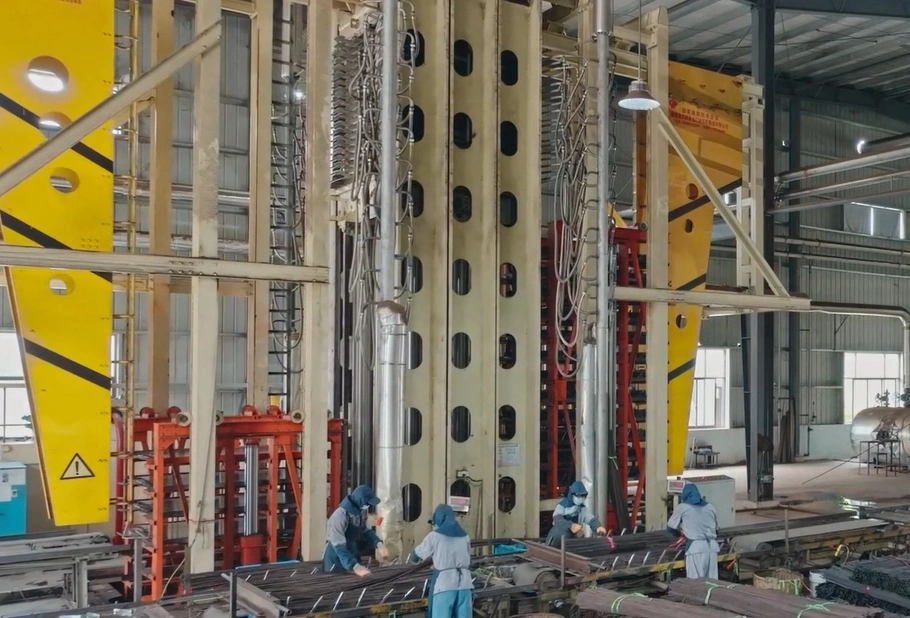
We use hot pressing to turn bamboo strands into dense, durable material with stable structure. During hot pressing, bamboo strands are layered into molds and compressed at temperatures up to 130°C and pressures over 20 MPa, with steam circulating throughout the press system. Heated platens evenly transfer thermal energy, allowing the resin to fully flow and cure within the bamboo fiber bundles.
The combination of heat and pressure creates strong internal bonding, significantly enhancing dimensional stability and resistance to moisture, decay, and warping. In this process, a 15 cm thick bamboo mat can be compressed into a 2.1 cm board.
We operates the industry’s largest 5400-ton press and is the only manufacturer capable of producing bamboo scrimber panels up to 60 mm thick and 4.2 metres long, opening the door to large-format structural applications.
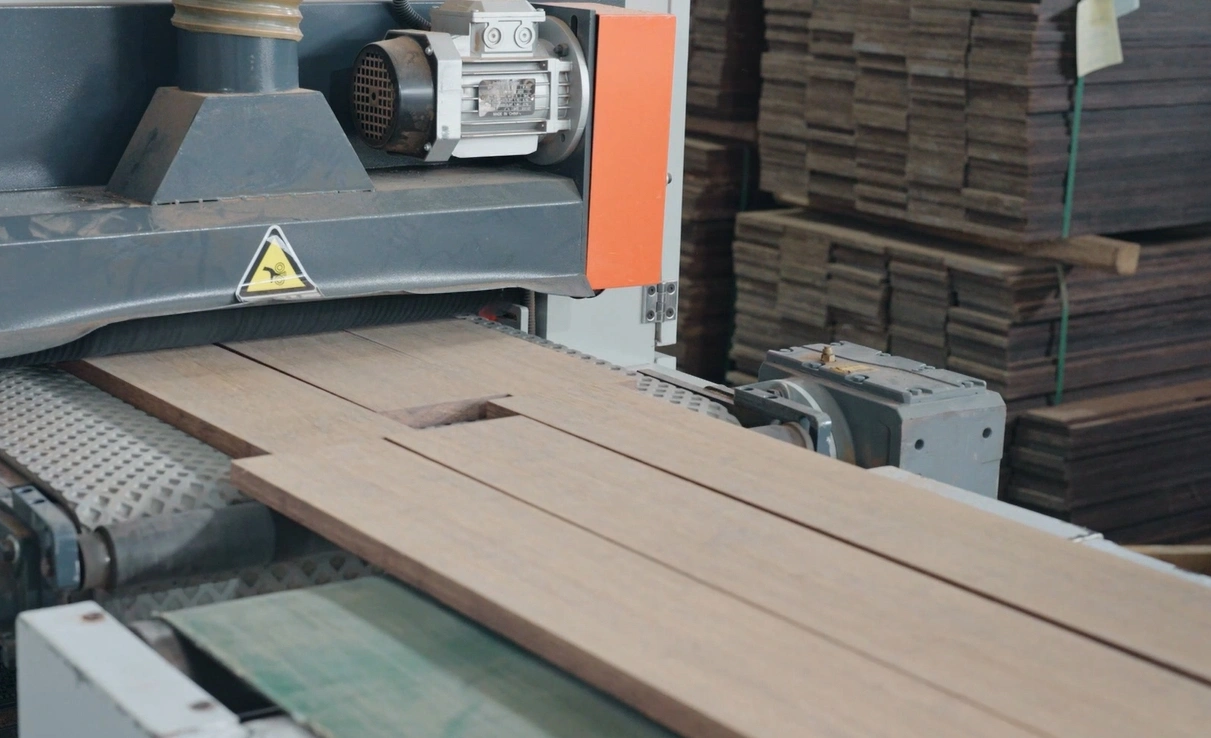
6. Shaping and Finishing
Once the hot-pressed bamboo panels have stabilized, releasing internal stress and reaching chemical and physical equilibrium, they go through a series of processing steps:
This stage ensures that every product is beautiful and ready for long-term use.
Benefits of ZHUART Thermo Bamboo
ZHUART Thermo Bamboo is a high-performance sustainable building material. It offers a combination of strength, dimensional stability, and durability that competes favorably with traditional hardwoods and composite alternatives.
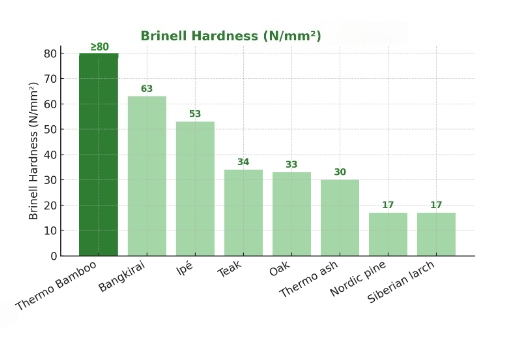
Exceptional Density & Hardness
At 1150-1250 kg/m³, Thermo Bamboo exceeds the density of premium hardwoods like oak (700 kg/m³) and even ipe (1100 kg/m³). This high density, combined with high bending strength (≥80 MPa), gives it excellent wear resistance and structural performance, making it well suited to high-traffic decks, boardwalks, and outdoor flooring..
Long-lasting Durability
With Class 1 durability rating (EN 350), Thermo Bamboo can last over 25 years in outdoor use. This surpasses most hardwoods including teak, which usually get Class 2 ratings.
Outstanding Dimensional Stability
Heat treatment greatly lowers the material’s tendency to expand, contract, warp, or crack with changes in humidity and temperature. Its swelling rate stays below 1% after 24 hours in 20°C water (compared to 2-4% for traditional hardwoods). Thermo Bamboo keeps its shape in tough environments.
Natural Fire Resistance
It meets Class Bf1-s1 (EN 13501-1) and Class A (ASTM) fire safety standards without using harmful fire retardants. This natural fire resistance beats both regular timber and WPC materials, which often need chemical treatments to reach similar ratings.
Eco-Friendly & Sustainable
Moso bamboo reaches harvest age in 4-6 years versus 50-100 years for hardwoods. It absorbs 35% more CO₂ than similar timber forests. Our production process achieves over 90% raw material use, twice the efficiency of traditional wood processing.
Healthy Living Environment
With Class E1 VOC emissions, Thermo Bamboo supports better air quality compared to many treated woods and WPC products that may release harmful compounds over time.
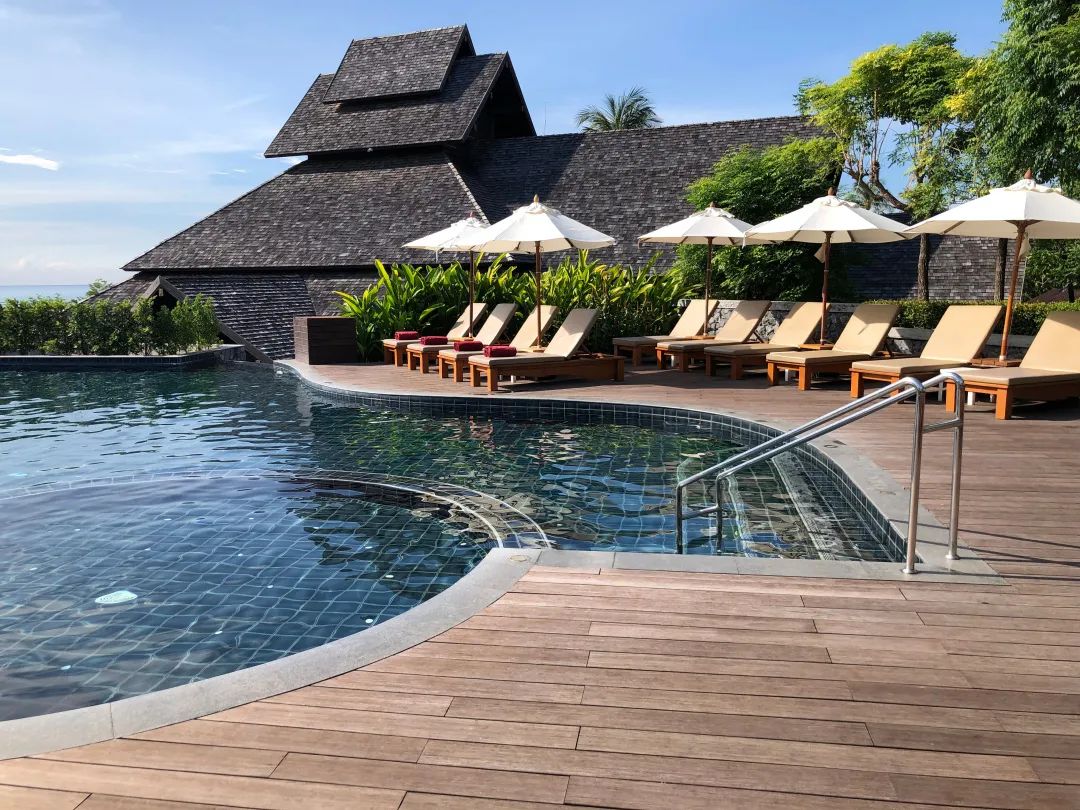
Expert Insight: While premium hardwoods like ipe and teak have traditionally dominated high-end outdoor applications, ZHUART Thermo Bamboo offers comparable or superior performance with significantly better environmental credentials. Unlike WPC products that sacrifice authentic appearance and feel for maintenance benefits, Thermo Bamboo delivers the best of both worlds—natural aesthetics with exceptional durability and minimal maintenance requirements.
Thermo Bamboo vs. Traditional Materials
Property | ZHUART Thermo Bamboo | Traditional Hardwoods | WPC |
|---|---|---|---|
Density | 1150–1200 kg/m³ | 600-1100 kg/m³, species dependent | 950-1100 kg/m³ |
Stability | Excellent | Moderate to poor | Prone to deformation in extreme temperatures |
Fungus Resistance | Class 0 (High) | Class 1-3, species dependent | Good |
Termite Resistance | Class 10 (High) | Low to moderate | Moderate to High |
Bending Strength (MOR) | 80-140 MPa | 50-140 MPa, species dependent | 20-40 MPa, lower mechanical strength |
Sustainability | Harvest cycle: 4-6 years | Harvest cycle: 30-100 years | Contains plastics |
Maintenance Requirements | Low | High, regular sealing/ staining required | Low |
Natural Appearance | Wood-like | Natural beauty | Artificial look |
Heat Retention | Low, comfortable in hot weather | Moderate to low | High, can become uncomfortably hot |
Applications for Thermo Bamboo
Start Your Next Project with ZHUART
ZHUART delivers eco-smart bamboo solutions with exceptional performance and lasting durability.